Trusted Women's Health & OB-GYN Care in Seoul · All-Female Specialists
4.9 Patient Satisfaction
en-US

Medical Guide
21.9% Cervical Health Concerns: Shift to Regular Pap Smear Testing
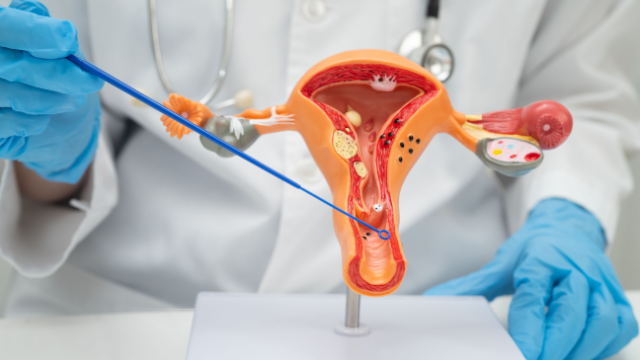
Cervical health has emerged as a major focus within Korean preventive medicine. According to a nationwide public health analysis, approximately 21.9% of women undergoing specialized gynecological screenings present with cervical health conc
Schedule a ConsultationCervical health has emerged as a major focus within Korean preventive medicine. According to a nationwide public health analysis, approximately 21.9% of women undergoing specialized gynecological screenings present with cervical health concerns ranging from persistent human papillomavirus (HPV) infections to atypical cellular changes. For families navigating preventative healthcare, these numbers highlight a clear shift in how proactive diagnostic screening is prioritized across the country.
At Tongil OB&GY Clinic, managing reproductive wellness requires a transition from reactive symptom tracking to early, high precision detection. This article addresses Korean patients and their families who are looking to understand how modern screening protocols safeguard long term health. By analyzing current clinical baselines, patients can make informed decisions about routine diagnostic monitoring.
Why Is the National Screening Rate Shifting in Korea?
Understanding how standard testing addresses cellular variations helps frame the modern approach to preventive gynecology.
What is a Pap Smear Test and how does it protect cervical health?
A Pap Smear Test is a straightforward, micro-sampling procedure where cells are collected from the cervix to check for abnormalities before they develop into more serious conditions. In Korea, while the National Cancer Screening Program has successfully expanded access by offering biennial testing to women aged 20 and older, opportunistic or advanced diagnostic screenings are increasingly utilized to capture subtle cellular changes that standard high volume public health screenings might miss.
Why are early cervical health abnormalities rising among young Korean women?
Data from the Korean National Cancer Screening Survey shows that while overall advanced cervical cases have stabilized due to vaccination programs, early-stage cellular changes and local viral trends have increased among individuals in their 30s and 40s. Sociocultural shifts, increased awareness, and more precise testing metrics mean that conditions are being identified far earlier than in previous generations.
Current Standard Screening Approaches and Performance Metrics
The standard approach to cervical screening in Korea relies heavily on the conventional Papanicolaou (Pap) smear. While widely available, this method possesses specific performance boundaries that require careful diagnostic positioning.
- Conventional Pap Smear: Cells are collected manually, smeared onto a glass slide, and fixed.
Pros: Highly accessible; fully covered under national health frameworks; low upfront individual cost.
Cons: Higher rate of obscured samples due to blood or mucus; potential false-negative rates ranging from 20% to 40% in single sample collections; requires frequent repeating.
Basic Visual Inspection: Observational assessment performed during pelvic exams.
Pros: Immediate situational awareness for macro-lesions.
- Cons: Subjective; entirely incapable of identifying micro-cellular changes or underlying viral presence.
Common Patient Pain Points
Diagnostic Anxiety: Waiting for results only to receive an "inadequate sample" notice due to slide contamination.
Overscreening Friction: The need for highly frequent repeat visits to compensate for lower single test sensitivity.
Under-Detection: Missing early-grade cervical intraepithelial neoplasia (CIN) until it advances to higher clinical tiers.
Advanced Diagnostic Approach: Liquid-Based Cytology (LBC) and Co-Testing
To address the limitations of conventional slides, modern clinical protocols utilize Liquid-Based Cytology (LBC) combined with high-precision HPV DNA typing. This represents the specialized approach used to evaluate the 21.9% of women presenting with cervical health anomalies.
[Conventional Smear] -> Manual transfer -> Potential cell overlapping/obscuration
[Advanced LBC Method] -> Fluid suspension -> Automated filtering -> Single-layer clear view
How Liquid-Based Cytology Works
Instead of smearing collected cells directly onto glass, the provider places the collection brush into a specialized preservative liquid vial. This fluid suspension rinses 100% of the collected cells free from the collection device. In the laboratory, an automated system filters out confounding elements like red blood cells, inflammatory debris, and mucus. It then deposits a perfectly uniform, thin layer of cervical cells onto the slide.
High-Precision Tech Integration
By preserving the sample in a liquid medium, the clinic can perform "co-testing" from a single collection. The same vial supplies material for high-precision HPV DNA micro-arrays, identifying specific high-risk viral strains (such as HPV 16 and 18). This combined tech-driven planning minimizes diagnostic blind spots without requiring the patient to undergo multiple physical examinations.
Is Advanced Liquid-Based Cytology (LBC) in Korea worth the additional cost?
Yes. While conventional testing is covered under public health baselines, advanced LBC significantly reduces false-negative rates and sample collection errors. By minimizing the need for stressful re-testing and providing clear, single-layer cellular visibility, it delivers definitive diagnostic clarity that saves time and emotional distress.
Data and Clinical Outcomes: Conventional vs. Advanced Screening
Data from Korean population cohorts highlights a substantial difference in long term diagnostic clarity and patient outcomes when comparing basic screening methods to advanced co-testing paths.
Evaluation Metric
Conventional Path (Standard Smear)
Advanced Path (Liquid-Based Cytology + HPV DNA)
Specimen Adequacy Rate
85% – 90% (Frequently obscured by debris)
Greater than 98% (Automated filtering removes mucus/blood)
Sensitivity for High-Grade Changes
Approximately 55% – 60%
Greater than 85% – 90% when co-tested with DNA typing
False-Negative Variance
Higher baseline risk; requires frequent tracking
Exceptionally low; safely extends appropriate screening intervals
Patient Downtime / Re-call Rate
5% – 8% required to return for re-sampling
Less than 1% re-sampling rate due to technical issues
Long-term survival and outcome data published in Korean epidemiological journals indicates that regular, high-sensitivity screening correlates with a 38% reduction in advanced gynecological mortality. Catching cellular variations at the pre-cancerous stage allows for simple, non-invasive outpatient tracking rather than complex surgical interventions.
Local Insights: Navigating the Korean Healthcare Environment
Korean patient expectations are deeply rooted in efficiency, high-precision technology, and minimal lifestyle disruption. When handling cervical health, these priorities align directly with advanced diagnostic pathways:
Speed and Efficiency: Patients prefer comprehensive testing structures. The ability to extract cytology, high-risk viral typing, and secondary biomarker tracking from a single liquid vial satisfies the demand for streamlined care.
Regulatory & National Frameworks: The National Health Insurance Service (NHIS) covers basic testing every two years. However, local clinical trends show a steady increase in patients opting for out-of-pocket advanced LBC overlays to ensure comprehensive diagnostic coverage.
Preventive Health Awareness: Especially within the 30–50 demographic, there is a growing rejection of "waiting for symptoms." Korean women increasingly seek out specialized clinics that offer detailed risk-stratification rather than standard public health checklists.
Where Tongil OB&GY Clinic Fits in Cervical Health Care in Korea
Tongil OB&GY Clinic occupies a dedicated space within preventive and diagnostic gynecology by providing systematic, data-driven cervical monitoring. Rather than treating a Pap Smear Test as a simple check-the-box administrative requirement, the clinic integrates it into an advanced cervical health protocol.
The clinic utilizes liquid-based cytology platforms to process samples, ensuring that cellular interpretation is performed under optimal laboratory conditions. When anomalies are flagged within the 21.9% risk threshold, the medical team implements personalized follow-up algorithms. This includes high-magnification colposcopy and targeted local mapping to ensure clear, objective tracking over time.
Led by Dr. Rae Ok Park an experienced OB&GY specialist with extensive histories in private clinical practice and memberships in relevant Korean societies for gynecologic endoscopy and oncology, the clinic focuses on objective metrics. The clinical team reviews sample adequacy rates and viral load variations to guide patients calmly through their options, ensuring that care remains clear, measured, and focused on preserving overall quality of life.
Conclusion
Cervical health management in Korea is undergoing an important evolution, moving away from basic, single-slice testing toward high-precision liquid diagnostics. With roughly 21.9% of screening encounters highlighting some form of cervical health concern, relying on older, easily obscured testing methods can leave unnecessary gaps in a preventative health strategy. Utilizing advanced liquid-based cytology alongside viral co-testing provides families with reliable clinical clarity and reduces the friction of diagnostic errors.
Patients considering a Pap Smear Test in Korea can schedule a consultation to discuss whether this approach may be suitable for their specific condition and goals.
More Articles
Continue reading our clinical guides.
Why Patients Choose Korea for Minimally Invasive Gynecological Care
The landscape of women’s healthcare in South Korea is undergoing a rapid transformation. According to the Korea Health Industry Development Institute KHIDI, foreign patient visits surged by 93.2% in 2024, with the medical tourism market pro
Learn More

Korean Medical Tourism: Why Reproductive Health Consultation Leads the Market
The landscape of global healthcare is shifting rapidly, with South Korea emerging as a premier destination for specialized care. In 2024, the South Korean medical tourism market surpassed a historic milestone, welcoming over 1.17 million fo
Learn More

Holistic Menstrual Cycle Care: A Local Niche for Women in Seoul
The landscape of women’s healthcare in South Korea is undergoing a significant shift. While traditional interventions have long focused on symptomatic relief, a growing number of women are seeking "root-cause" solutions. Recent market repor
Learn More